


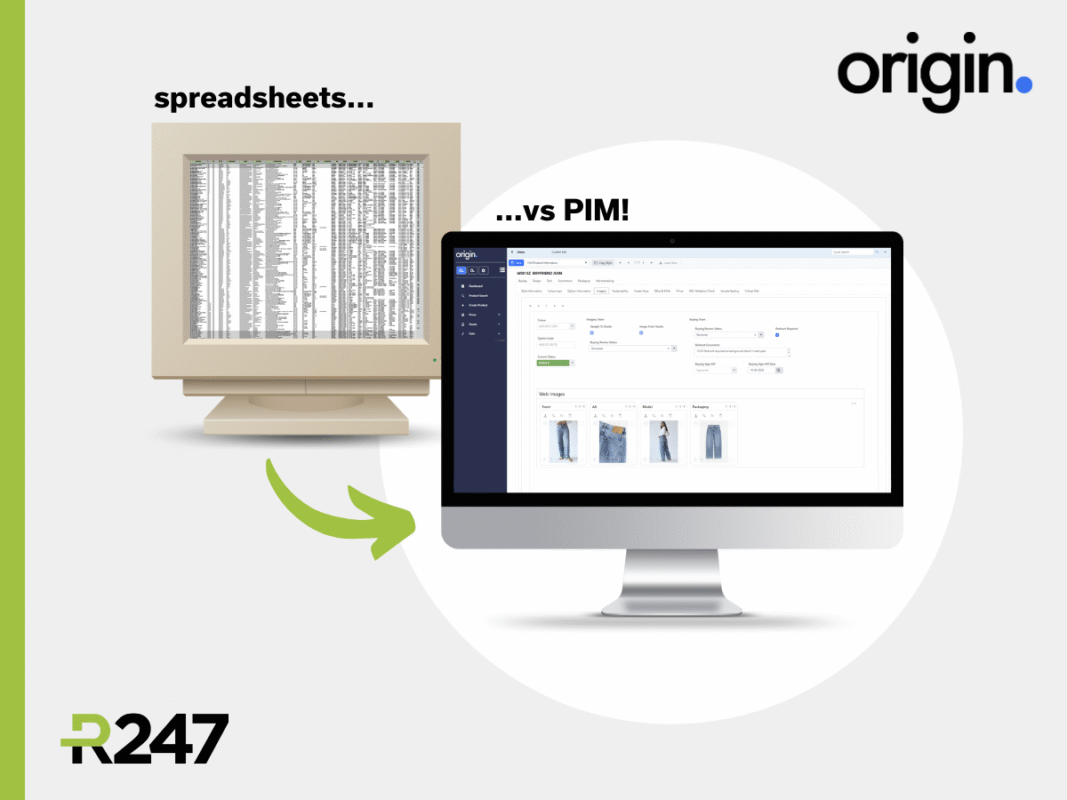
If your team is still managing product data in spreadsheets, you’re not alone, but you’re likely losing time, accuracy and competitive advantage every single day. As your catalogue grows and your channels multiply, those once-useful spreadsheets start to buckle under the pressure. So the real question is: PIM vs spreadsheets – when is it time to move on?
Why Spreadsheets Break at Scale
Spreadsheets are flexible and familiar. However, they’re not built for complex product operations. As ecommerce teams expand and SKUs multiply, spreadsheets introduce friction instead of efficiency.
Here’s where spreadsheets fall short:
- No real-time collaboration
- Error-prone manual updates
- Lack of workflow control or approval tracking
- No single source of truth for product data
- Version control nightmares across teams and markets
These issues lead to delays, inconsistencies across channels and missed opportunities.
PIM vs Spreadsheets: What is a PIM and What Does it Do Better?
A Product Information Management (PIM) system is a centralised platform to manage all your product content (EG attributes, descriptions, assets, translations and more) in one structured hub.
When you compare PIM vs spreadsheets, the difference is clear:

When to Move From Spreadsheets to PIM
Here are the 5 signs it’s time to switch:
- You’re managing 100+ SKUs across multiple platforms
- Your product data exists in multiple versions or formats
- Your team spends hours copying and pasting content
- You’ve made public-facing product mistakes due to outdated information
- You can’t launch products quickly due to internal bottlenecks
If any of these sound familiar, it’s time to rethink your product data strategy.
How PIM Unlocks Efficiency and Scale
Moving from spreadsheets to a PIM (like Origin from Retail247) gives your team
- A single source of truth for all product data
- The ability to bulk edit content across SKUs and channels
- Structured workflows for governance and approval
- Faster product launches across ecommerce, marketplaces and DTC platforms
- Greater confidence in your content accuracy and brand consistency
Ready to Leave Spreadsheets Behind?
When it comes to PIM vs spreadsheets, it’s no contest. Spreadsheets were built for numbers, but PIM was built for scale.
Ready to upgrade your product data workflow? Book a demo here.
